
Relief
Feed a Family
R200 fills one family food parcel.
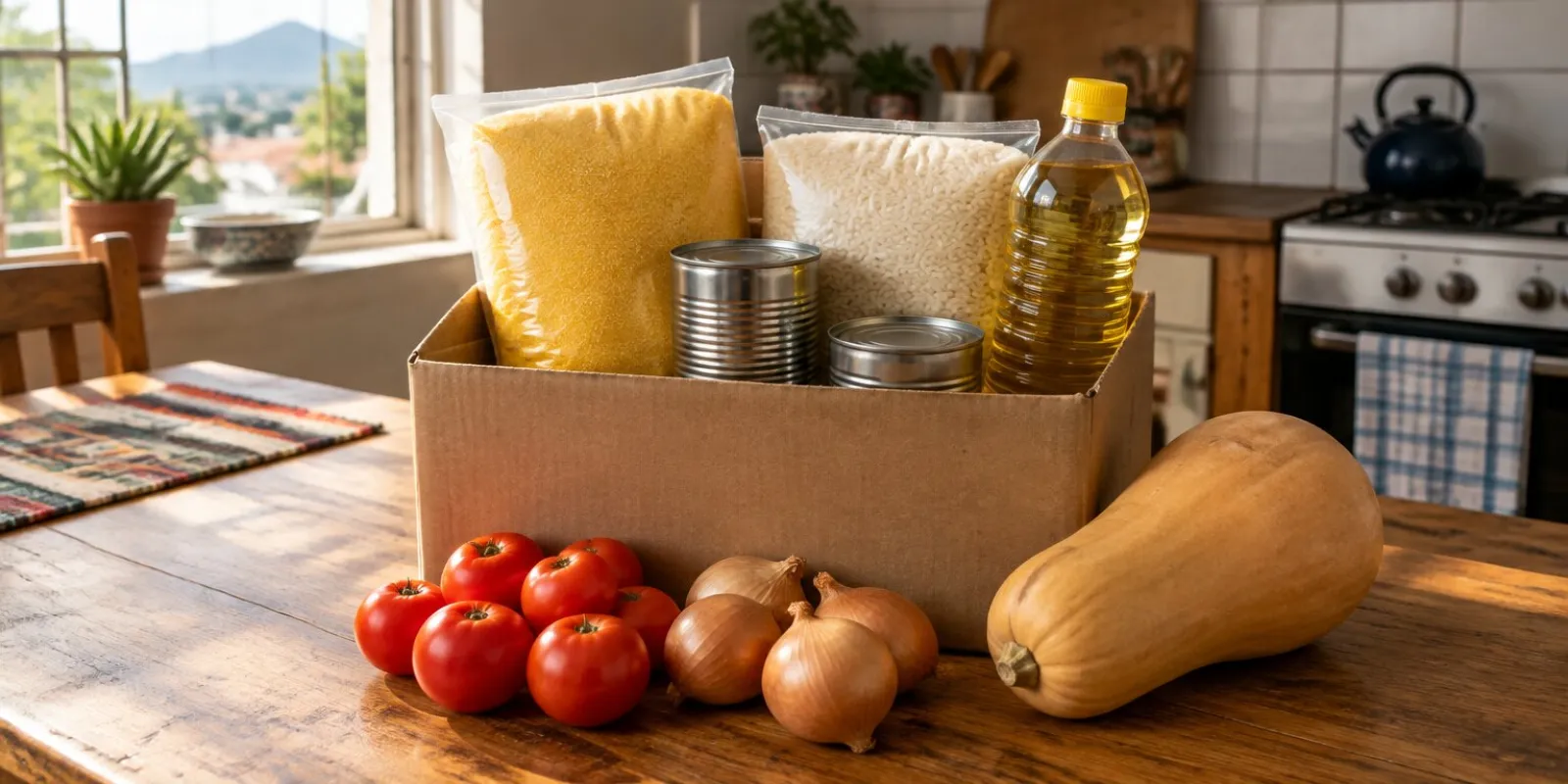
A parcel of dry goods, tinned food and staples that carries a household through the month when the money has run out.
- R3 117 000
- raised
- 93 510
- beneficiaries
- 15 585
- families reached
About Feed a Family
Operation Hunger launched the campaign to help feed families made vulnerable by the Covid-19 virus, climate emergencies and other food insecurity shocks.
Each food parcel is made up of dry and tinned foods worth R180: sugar, tea, milk, maize meal, samp, beans, lentils, oil, salt, beef stock and tinned fish.
The campaign has been a tremendous success, raising over R3 million from donors around the globe.
Monthly donations
From as little as R200 a month you can help to feed one of South Africa’s vulnerable families on an ongoing basis.
Media and partners
Feed a Family has gained extensive media coverage, and the Love Food Love Family campaign will be broadcast by our media partners, including live interviews and broadcasts from participating restaurants. The Feed a Family campaign has a social media reach of 1.3 million individual views, 295 000 impressions and 35 000 shares.
Feed a Family supporters include Bestmed, SEACOM, Johnson & Johnson, African Bank, SPAR, Shoprite and Webhelp.
Watch
What your gift buys
- R200 1 family One food parcel, delivered and signed for.
- R600 3 families Three households through the month.
- R1 000 5 families A street corner of a community.
- R2 000 10 families Ten households, one delivery run.
- R5 000 25 families A quarter of a feeding site.
- R10 000 50 families Half a community for a month.
Good to know
Questions donors ask
Operation Hunger has a history of positive action in the fight against malnutrition in South Africa’s homes, schools and communities since 1978. We continue to build strong partnerships with business, communities, social development agencies and civil society to enable inclusive, innovative, measurable and tailored community programmes that respond to hunger, household food insecurity and malnutrition in all its forms.
The communities in which Operation Hunger operates are generally in deeply rural areas or sprawling informal settlements with little or no basic services, very few resources and minimal health care. In these areas we fight malnutrition with education and skills development, training stakeholders and initiating sustainable projects that address the root of the malnutrition problem: poverty.
Operation Hunger has reached about 2.4 million lives countrywide through its community programmes.
Each food parcel is made up of dry and tinned foods worth R180: sugar, tea, milk, maize meal, samp, beans, lentils, oil, salt, beef stock and tinned fish.
R180 pays for the full food parcel that goes to the beneficiary family, and R20 goes towards the cost of distribution.
Beneficiaries are families in the target communities who have no source of income. They are identified by community leadership together with local relief committees and Operation Hunger. Each family receives a food parcel worth R180.
Once Operation Hunger receives the donation, dry bulk foods and tinned foods are bought at the local supermarket nearest to the targeted cluster of communities. These are divided into food parcels worth R180 each.
An Operation Hunger champion collects the parcels and delivers them to each target community, where they are distributed to the beneficiaries listed and agreed by the relief committee and Operation Hunger. Beneficiaries sign as they receive their parcels.
Operation Hunger works hand in hand with local municipalities, local police representatives and the community relief committees identified by each community. These committees receive basic hygiene and safety training from Operation Hunger before they handle the food.