
Sustainability
Sustainable Nutrition
Climate-smart food, grown where it is eaten.
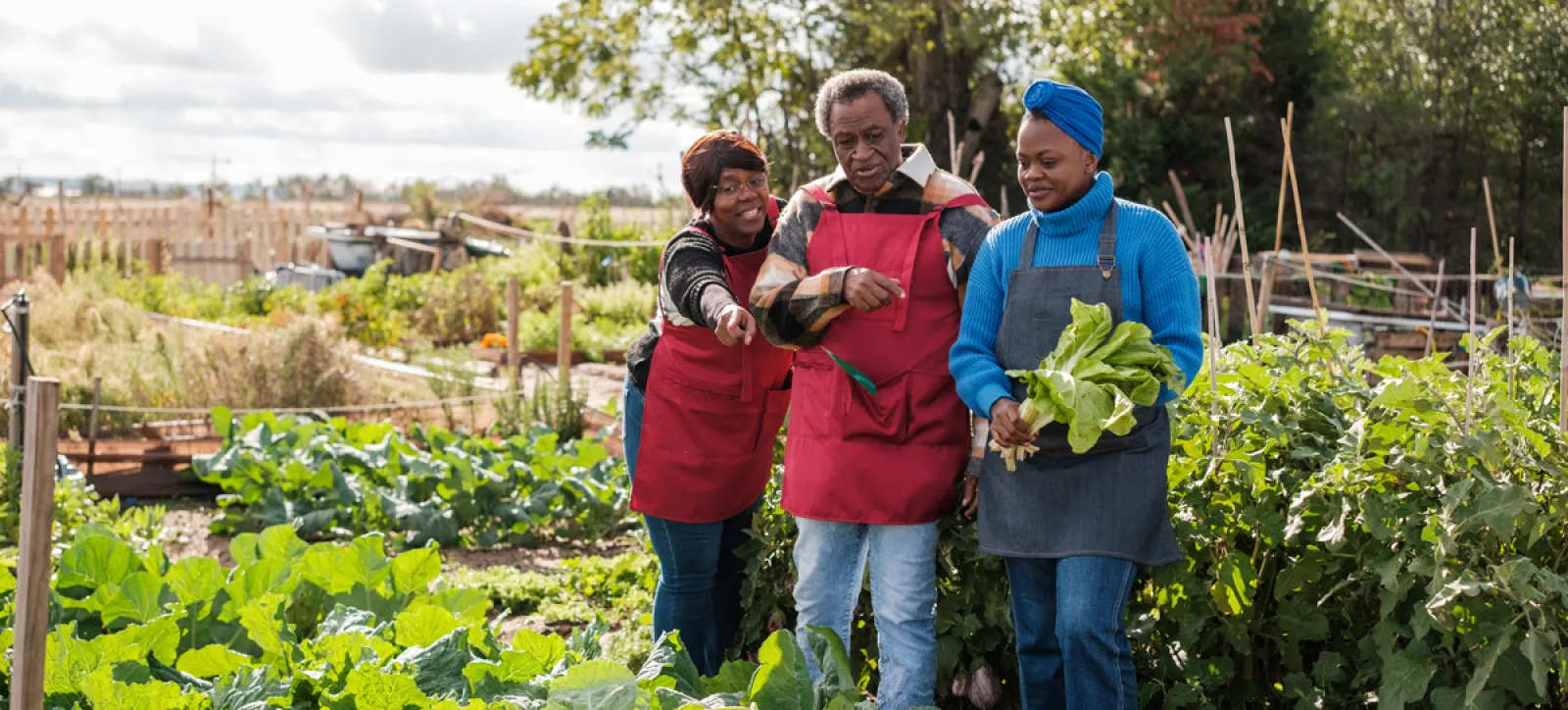
Bio-diverse community gardens, 25 metres square, each feeding 350 families a day and supporting up to 2 000 people.
- 15%
- of South Africans face daily food insecurity
- 36%
- of households lack varied, nutrient-rich meals
- Half
- of the WHO-recommended fruit and vegetable intake is met
- 70%
- more expensive for a healthy diet
- 80%
- of the most inflated food items are vegetables
- 64%
- of low-income families rely on calorie-dense, low-nutrient foods
Climate-smart food solutions for lasting change
South Africa’s nutrition and food security crisis is deeply entangled with climate change, poverty and systemic inequality. At Operation Hunger, we address this complexity by planting seeds of sustainability, literally. Through bio-diverse, community-driven gardens, we grow solutions that feed families, restore ecosystems and strengthen futures.
Nutrition in crisis: a triple burden worsened by climate
Shifting rainfall patterns, droughts, floods and rising temperatures are all worsening food insecurity in South Africa. Coupled with the socio-economic after-effects of Covid-19 and inflation, communities face a dangerous “triple burden” of malnutrition: undernutrition, micronutrient deficiency and obesity.
- Roughly 15% of South Africans face daily food insecurity.
- Over one-third of households lack varied, nutrient-rich meals.
- Fruit and vegetable intake meets only half of WHO recommendations.
- Healthy diets are nearly 70% more expensive than unhealthy ones.
- 80% of the most inflated food items are vegetables.
- 64% of low-income families rely on calorie-dense, low-nutrient foods.
Growing food, growing futures
Our 25m x 25m bio-diverse gardens are more than food plots: they are resilient, self-sustaining nutrition hubs that feed communities, generate income and support local ecosystems.
- Community reach. Each garden supports sustainable nutrition for up to 2,000 people.
- Secured space. Fenced perimeters ensure the safety and protection of garden assets.
- Water efficiency. Irrigation systems provide a consistent water supply throughout the year.
- Smart planting. Organic, permaculture and companion methods boost resilience and yield.
- Healthy soil. Regenerative techniques restore soil health and reduce chemical use.
- Diverse crops. A wide range of produce enhances nutrition and dietary variety.
- Daily feeding. Feeds 350 families daily through local Operation Hunger schemes.
- Income support. Produce sales to locals help sustain the garden and support livelihoods.
Growing impact
Operation Hunger’s community garden model is a step-by-step approach designed for long-term sustainability, community empowerment and food security. From site selection to impact tracking, each phase builds resilience and drives meaningful change on the ground.
- Onboarding. Community-led site selection and mobilisation ensure local buy-in from day one.
- Set-up. Irrigation systems and garden beds are installed to support year-round growing.
- Training. Participants gain skills in organic farming, soil care, nutrition and local market sales.
- Monitoring. We track garden yields, nutrition output and household income to measure success.
- Scaling. Replicable systems enable garden expansion and long-term sustainability tracking.
Why these gardens matter
Community gardens are more than food sources: they are engines of social upliftment and environmental regeneration. Each garden cultivates local resilience by improving access to nutritious food, transferring valuable skills and generating income, while restoring ecosystems, promoting biodiversity and preserving indigenous farming knowledge. Their impact is deeply rooted in both people and planet.
Community benefits
- Better access to nutrient-dense food
- Income generation from local produce sales
- Skills transfer: nutrition, gardening and business
- Access to informal markets
- Community pride and ownership
- Children learn about food origins and sustainability
Environmental benefits
- Reduces soil erosion and water runoff
- Lowers local temperatures (heat island mitigation)
- Enhances air quality (CO₂ absorption)
- Preserves indigenous farming knowledge
Teaching today, growing tomorrow
Our community gardens double as living classrooms, offering hands-on experience of growing, harvesting and preparing nutritious food. Participants learn about environmentally friendly farming, food system economics and dietary needs, empowering future generations with the knowledge to stay healthy and self-sufficient.
Monthly donations
From as little as R200 a month you can help to feed one of South Africa’s vulnerable families on an ongoing basis.
Every rand donated is directed to the activities described above.