
Field report 2 min read
Thaga Village
Thaga Village Current Phase: 3 Converting Subsistence Farming to Commercial Cooperative Agri -Hubs as an additional Coping Strategy. Achieved Statuses: Ongoing Broad-based Feeding Support, Basic Nutrition Education, Health and Nutrition Awareness Campaigns, PRA Assessment, Ong...
 Thaga Village Current Phase: 3
Converting Subsistence Farming to Commercial Cooperative Agri -Hubs as an additional Coping Strategy.
Achieved Statuses: Ongoing Broad-based Feeding Support, Basic Nutrition Education, Health and Nutrition Awareness Campaigns, PRA Assessment, Ongoing Nutrition Surveillance and Anthropometric Surveys Assessments, Stage 2 of the PRA(Training) Process, Biodiverse Community Permaculture Garden, Food System Coping Environments Centralised, Complementary rural enterprise establishment; Youth Programs focusing on early child bearing and maternal nutrition.
Impact Direct Beneficiaries Inirect Beneficiaries R0 of R100 000 raised

- R200
- R600
- R1000
- R2000
- Own Amount
- PayFast (Credit Card, Debit Card, Instant EFT)
- Manual EFT
First Name *
Last Name
Email Address *
Make this an anonymous donation.
Comment

Donation Total: R200.00
{amount} donation plus {fee_amount} to help cover fees.
Food Security status in the area.
Thanga village is a rural village situated in uMqanduli town formally demarcated under King Sabata Dalidyebo Local Municipality. The Household Food Insecurity Survey indicates that the majority of the respondents depend more on social grants for their livelihood (54.8-75.9%). Agriculture forms the second largest main livelihood coping strategy (38.7-45.2%). However, water for irrigation is still a huge barrier for both household and cooperative agricultural practices.
Households were categorised into food security categories using the Household Food Insecurity Access Scale (HFIAS) . Most households across the district are in the category of moderately food insecure. This is followed by fewer households that are mildly food insecure. We have very few outliers across the district that are food secure and severely food insecure. Household food security is predominantly affected by external incomes including salaries, remittances, grants and pensions. These sources of income are not stable and hence the instability in household food security.
- Main Household livelihood strategy (Please note that the Nutrition Surveillance was compiled for the entire local municipality for all Mqanduli’s villages)
Main Livelihood Strategy
King Sabata Dalindyebo Local Municipality
Cooperative
(39.4%)
Employment
13.6%
Grant
75.8%
Trade/Business
1.5%
Labour/ Wages
3.0%
Household Farming
10.6%
- Type of Land Ownership
Type of Land Ownership
King Sabata Dalindyebo
Communal
25%
Coop Members’land
47.1%
Lease Agreement
2.9%
Permission to Occupy
23.5%
Non Specific
1.5%
3.Household food security categories.
Food Security Categories
King Sabata Dalindyebo Municiplaity
Food Secure
13.4%
Mildly Food insecure
23.9%
Moderately Food Insecure
53.7%
Severely Food Insecure
9.0%


Reading about it is one thing
R200 is a family food parcel: dry goods, tinned food and staples that carry a household through the month.
Give R200Keep reading
More from the ground
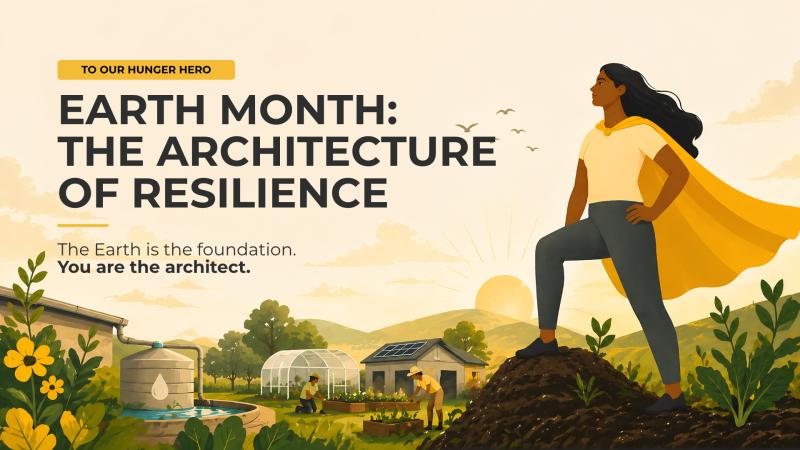
Field report
Hunger Heroes: Safeguarding the progress we’ve built together
Understanding the ShiftAcross South Africa, climate shocks are no longer seasonal anomalies. Floods, droughts, heatwaves, and sudden environmental disruptions are occurring with increasing frequency and broader geographic spread. These events are no longer confined to predictable...
2 min read
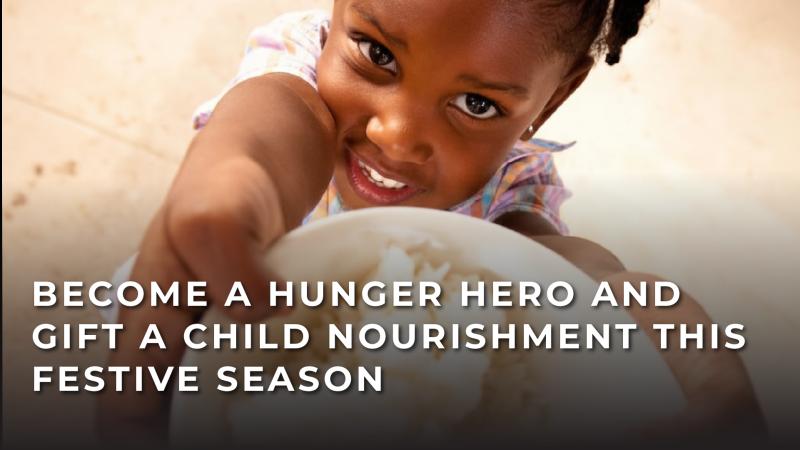
Field report
Become a Hunger Hero: Gift a Child Nourishment This Festive Season.
The holidays should be a sanctuary, a time when every child should experience warmth, rest, and security. Yet for too many children in South Africa, the holiday break brings something far more devastating. When schools and ECD centres close, the daily meal they rely on disappears...
4 min read